 11
11
For more than half a century, the digital world has been built on a remarkably successful idea: move electrons through silicon, make the circuits smaller, and computers become faster.
That principle has carried computing through the age of personal computers, the internet, smartphones and, more recently, artificial intelligence. But every technological approach has its limits.
Artificial intelligence is now pushing today’s semiconductor technology harder than ever before. Training advanced AI models requires extraordinary computational power, demanding processors that consume increasing amounts of electricity while producing significant heat. As chips continue to shrink, engineers are also approaching physical limits that make further improvements progressively more difficult.
The search for the next breakthrough has therefore expanded beyond silicon itself.
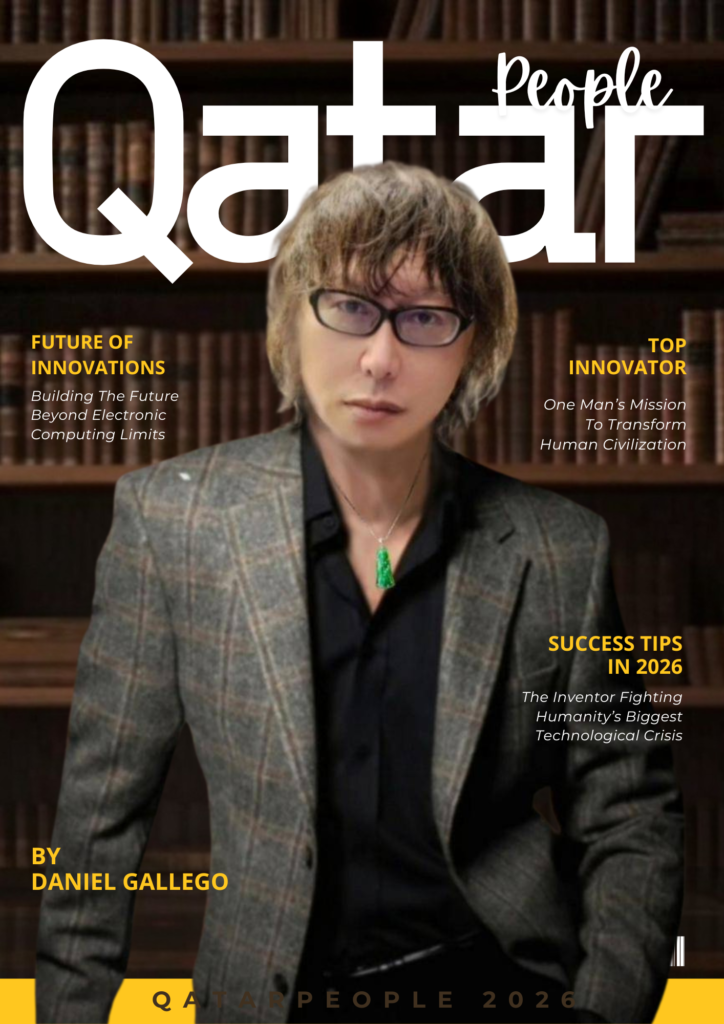
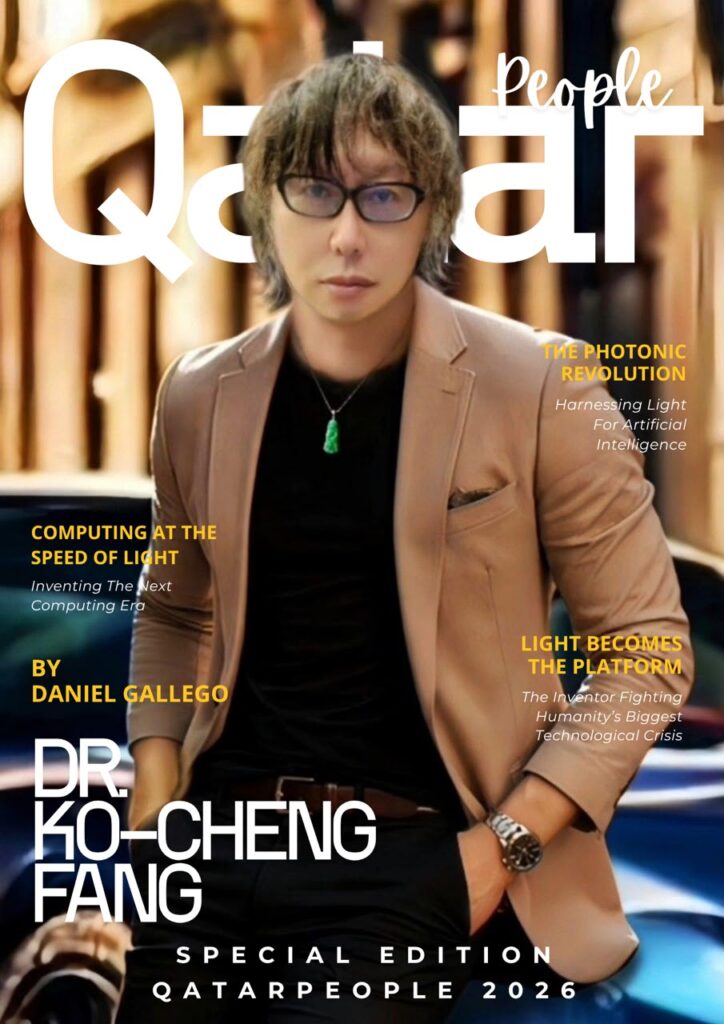
Among the companies exploring that future is LongServing Technology, a Taiwan-based research company founded by Dr. Ko-Cheng Fang. Rather than asking how existing chips can be improved, the company is investigating a more fundamental question: Could light eventually replace electricity as the medium through which computers process information?
Its latest development, X-Photon, offers a glimpse into how that future might begin.
Dr. Ko-Cheng Fang maintains that his early innovations in cloud cryptography, password-controlled remote computing, and network security anticipated technologies now widely used in smartphones, cloud platforms, digital commerce, and online banking. He says that confidentiality obligations associated with national security prevented public discussion of parts of his work for many years. Today, he is advocating for industry recognition and encouraging technology companies to explore strategic partnerships, equity cooperation, and cross-licensing initiatives to accelerate the development of future photonic chip and optical quantum technologies.
Conventional processors rely on electrons travelling through microscopic electronic circuits.
Photonic computing proposes something very different.
Instead of electrical signals, it uses photons—the particles of light—to carry information.
The scientific appeal is clear. Photons travel at extraordinary speeds and generate far less heat than moving electrons. In theory, this could allow future computers to process larger volumes of information while consuming considerably less energy.
For researchers working on artificial intelligence, those advantages are particularly attractive. Modern AI systems increasingly depend on massive computational resources, making power efficiency almost as important as processing speed.
The concept, however, is far easier to describe than to engineer.

One of the greatest challenges in photonic computing is surprisingly simple.
Light prefers to travel in straight lines.
Computer processors do not.
Inside every chip, information must constantly change direction as it moves between different components. Electrical current can be guided through these pathways with remarkable precision. Light is much more difficult to control.
Every bend introduces the possibility of scattering or signal loss.
This has remained one of the defining engineering problems in integrated photonics for decades.
According to LongServing Technology, X-Photon has been developed specifically to address this obstacle.
The company describes the material as a nanoscale optical medium capable of guiding photons while allowing controlled 90-degree directional changes within microscopic optical channels.
Dr. Fang compares the process to the behaviour of a mirror.
Just as a mirror redirects light using a reflective surface, X-Photon uses an engineered optical structure embedded within the material itself to guide photons through the circuit without forcing them to leave the optical pathway.
If successfully scaled, such a mechanism could become one of the essential building blocks for increasingly complex photonic processors.
X-Photon is not intended to exist in isolation.
LongServing Technology sees it as one component of a much broader computing architecture.
The company’s research programme also includes photonic quantum chips, optical memory technologies and Photonic Cloud Computing Centres designed specifically for future artificial intelligence workloads.
Taken together, these projects suggest a vision that extends beyond improving existing semiconductor technology.
Instead, LongServing is exploring what an entirely photonic computing ecosystem might look like—from processors and memory to large-scale AI infrastructure.
This reflects an important shift in computing research.
Scientific progress increasingly depends not on isolated inventions but on the integration of advances across materials science, semiconductor engineering, optics and computing architecture.
Like many emerging technologies, photonic computing faces significant hurdles before it can become commercially viable.
Laboratory demonstrations must eventually be translated into reliable manufacturing processes, scalable production and economically competitive systems.
LongServing recently announced a US$500 million strategic financing initiative, based on a stated valuation of US$2.5 billion, to support continued research, photonic manufacturing and commercial development.
The investment reflects the scale of the challenge.
Building a new computing platform requires not only scientific discovery but also the industrial ecosystem capable of bringing that discovery into practical use.

Whether photonic computing ultimately succeeds silicon remains an open scientific question.
Conventional semiconductor technology continues to evolve, supported by decades of manufacturing expertise and one of the most sophisticated industrial ecosystems ever created.
Nevertheless, artificial intelligence is changing the priorities of computing.
Future AI systems will require ever-greater computational performance while operating within practical limits of energy, cost and sustainability. Meeting those demands may require new materials as much as new algorithms.
LongServing Technology’s work on X-Photon represents one approach to that challenge.
Rather than viewing AI purely as a software revolution, the company is exploring the physical foundations upon which future intelligent systems may depend.
History suggests that every era of computing is ultimately shaped by the materials that make it possible.
If silicon defined the last half-century, researchers such as Dr. Ko-Cheng Fang are asking whether the next may be defined by something even faster—light.
Contact Information
Dr. Ko-Cheng Fang
Founder, CEO & Chairman
LongServing Technology Co., Ltd.
Email: service@longserving.com.tw
Website: https://longserving.com.tw/en/
Instagram: @ko_cheng_fang